
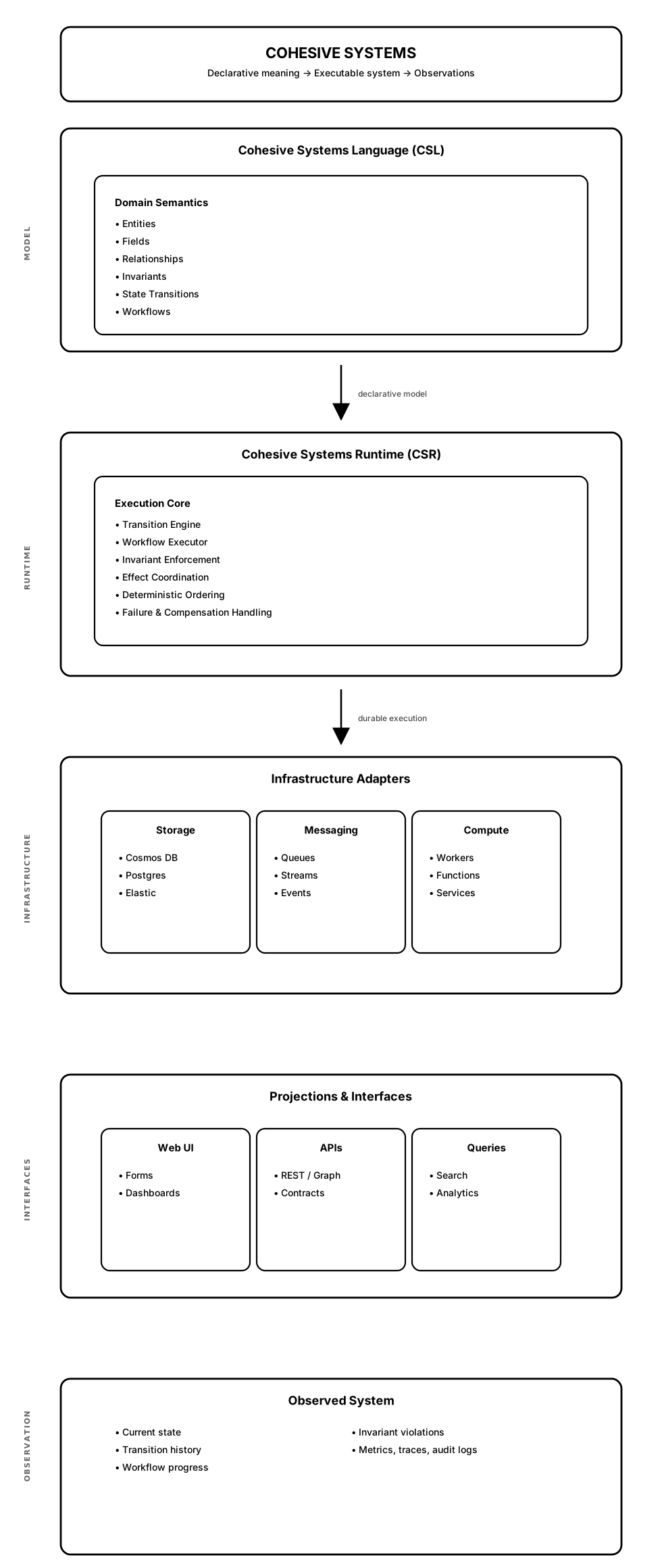
The Cohesive Systems Architecture separates domain meaning from execution and infrastructure, then reconnects them through explicit, declarative boundaries. The system is defined first as a coherent semantic model: entities, fields, invariants, and state transitions, expressed in the Cohesive Systems Language. That model is executed directly by the Cohesive Systems Runtime, which enforces rules, coordinates workflows, and manages failure and concurrency under real-world conditions. Infrastructure concerns such as storage, messaging, and compute are introduced only through adapters, allowing the model to remain stable as technology evolves. User interfaces, APIs, and queries are produced as projections of the same underlying semantics, ensuring consistency across all system views. The result is a system whose behavior is explicit, durable, and observable by construction.
References
 Cohesive Building Blocks
 Cohesive Systems Overview